Sponge 3D Text Effect and Editable Text: Reshaping Digital Typography
Typography has always been a battleground between visual richness and practical flexibility. Designers crave depth, texture, and dimensionality in their letterforms, yet they also need to make quick adjustments, swap out copy, and iterate without rebuilding entire compositions. The Sponge 3D Text Effect combined with Editable Text represents a rare convergence of these two demands, offering a porous, tactile aesthetic that remains fully live and adjustable. This hybrid approach is not merely a stylistic novelty; it represents a fundamental shift in how we think about volumetric type in both static and motion environments.
The Distinctive Character of Sponge 3D Typography
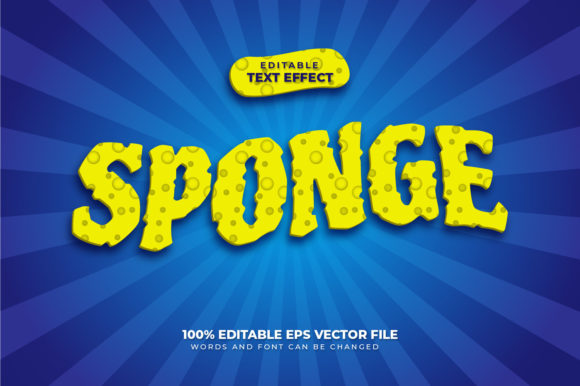
Unlike glossy metallic or rigid beveled text effects, the sponge aesthetic introduces organic irregularity and tactile warmth. The surface mimics the cellular structure of a natural sponge, with tiny voids, subtle undulations, and a matte, absorptive quality that diffuses light rather than reflecting it sharply. This creates a visual softness that feels approachable and handcrafted, even when rendered entirely in digital space. The Sponge 3D Text Effect is characterized by its porous topology, where light interacts with countless micro-cavities to produce a velvety, non‑specular appearance. The depth is real but not harsh, giving words a sculpted presence that invites touch.
What makes this effect especially compelling is that it does not sacrifice readability for texture. The letterforms remain crisp at their core, with the sponge texture applied as a surface treatment that respects the underlying typographic structure. This balance is critical for professional applications where legibility cannot be compromised. Designers working with Editable Text in this context can adjust font weight, tracking, or kerning, and the sponge effect adapts dynamically, preserving the illusion of carved porous material without requiring manual re‑texturing.
How Editable Text Transforms Workflow Efficiency
Traditional 3D text workflows often involve exporting from a modeling application, rasterizing the result, and then discovering that a client wants to change a single word. The entire process must be repeated, consuming hours and introducing version control headaches. Editable Text changes this paradigm entirely. When the Sponge 3D Text Effect is built into a live text layer, every character remains a typed element that can be modified, deleted, or replaced at any time. The sponge texture recalculates automatically, maintaining consistency across the entire string.
- Instant iteration: Stakeholders can request copy changes without delaying production. The designer updates the text, and the 3D effect regenerates in real time.
- Multi‑language adaptability: When localizing content, the editable nature ensures that different scripts, accents, and character sets are handled seamlessly within the same textured framework.
- Version experimentation: Designers can quickly test alternative phrasings or headline lengths without rebuilding the 3D scene from scratch, freeing creative exploration.
This workflow efficiency is particularly valuable in fast‑paced environments such as advertising agencies, product launch campaigns, and social media content pipelines, where turnaround times are measured in hours rather than weeks. The combination of Sponge 3D Text Effect and Editable Text effectively decouples the visual treatment from the content, allowing each to be refined independently.
Layering Complexity Without Losing Flexibility
One concern with editable 3D text effects is that they might oversimplify the visual outcome, trading complexity for convenience. However, modern implementations allow for considerable depth. Designers can layer multiple sponge textures with varying pore sizes, add subtle gradient maps to simulate lighting from above, or incorporate displacement maps that distort the surface in response to environmental cues. Because the text remains editable, these layers can be adjusted, hidden, or reordered without breaking the connection to the source characters.
For example, a professional creating a title sequence might want the sponge effect to appear dampened in certain areas and drier in others, simulating uneven absorption. With Editable Text, they can apply a masked adjustment layer that affects only specific letters or even specific portions of a letterform. The result is a highly customized visual that still allows last‑minute copy changes. This layering capability elevates the sponge effect from a simple filter to a sophisticated texture system suitable for high‑end broadcast, film, and interactive design.
Real-World Applications Across Industries
The Sponge 3D Text Effect with Editable Text has found traction in diverse fields, each exploiting different aspects of its character. In educational publishing, the tactile appearance helps draw young readers into headings and callouts, making learning materials feel more engaging and less sterile. The editable nature ensures that curriculum updates can be applied quickly across an entire series of textbooks or digital modules without redesigning each page.
In environmental graphics and signage, the sponge texture evokes natural materials and sustainability themes. Museums, nature centers, and eco‑brands use this effect to align typography with their messaging about organic processes and environmental consciousness. Because the text is editable, changes to exhibition titles or room names can be implemented on the fly, a practical advantage for venues that host rotating installations.
Branding and Identity Design
For brands that want to convey authenticity, craftsmanship, or a connection to nature, the sponge texture offers a distinctive alternative to flat, corporate typography. Startups in the organic food, skincare, and wellness sectors have adopted the Sponge 3D Text Effect as a signature element of their visual identity. The editable quality means that the same effect can be applied consistently across logos, product labels, website headers, and promotional materials, with copy changes handled efficiently in each medium.
A brand refresh becomes less daunting when the core typographic treatment is live. Marketing teams can experiment with taglines, promotional messages, and seasonal campaigns while maintaining the recognizable textured look that customers associate with the brand. This consistency builds trust and recognition without stifling creativity.
Educational and Instructional Materials
In e‑learning platforms and technical documentation, clarity and engagement are equally important. The sponge effect adds visual interest to headings, key terms, and interactive buttons, helping learners navigate dense information. Editable text allows instructional designers to update content based on user feedback or evolving standards without involving a 3D artist. This democratization of design empowers subject matter experts to maintain their own materials while benefiting from a polished, professional aesthetic.
Researchers presenting data at conferences have also used the effect to make poster titles and section headers more memorable. The subtle texture stands out among rows of flat text, drawing viewers into the content while remaining fully editable for last‑minute corrections or collaboration.
Technical Considerations for Optimal Implementation
While the Sponge 3D Text Effect is visually forgiving, a few technical factors influence the final quality. The resolution of the underlying texture map matters significantly. Low‑resolution sponge maps can appear pixelated or repetitive, especially on large‑format output. For professional use, designers should source or generate high‑resolution tileable sponge textures that maintain detail across different font sizes and scaling levels.
Lighting setup also plays a crucial role. Because sponge surfaces are highly diffuse, they respond best to soft, multi‑directional lighting that fills the cavities without creating harsh shadows. A three‑point light rig with a dominant key light, a fill light, and a subtle rim light tends to produce the most dimensional results. When the text is editable, the lighting should be applied to the scene rather than baked into the texture, ensuring that any changes to letterforms remain consistent under the same illumination.
- Performance optimization: Real‑time editable 3D effects can be resource‑intensive. Using optimized displacement maps and limiting polygon counts where possible helps maintain smooth interactivity, especially in web‑based or mobile applications.
- Fallback strategies: When the target platform does not support live 3D text, designers should prepare high‑quality rasterized versions that preserve the sponge character, while ensuring the editable source file remains available for future updates.
- Color and material coordination: The sponge effect works across a wide color range, but desaturated, earthy tones tend to enhance the natural feel. Vibrant colors can be used for playful or youthful contexts, though the texture may become less visible with very light values.
Testing across different output mediums is essential. A sponge effect that looks stunning on a high‑resolution monitor may lose its subtlety in print or on a smaller mobile screen. Scaling the pore size relative to the viewing distance helps retain the intended impression.
Creative Possibilities Beyond the Obvious
Once the fundamentals are mastered, the Sponge 3D Text Effect with Editable Text opens doors to more experimental applications. Animators have used the effect in kinetic typography, where letters grow and shrink as if absorbing moisture, or where the sponge texture gradually transforms into a different material over time. Because the text remains editable, these animations can be applied to variable content, making them suitable for dynamic data visualization or live event graphics.
Interactive designers have incorporated sponge text into web experiences where hovering over a letter reveals a cross‑section of its porous interior, or where clicking triggers a squelching sound and a brief deformation. These interactions rely on the underlying text remaining editable so that the same behaviors can be applied to any copy without custom coding each instance.
Mixed‑media artists have also explored combining the sponge effect with photography, placing editable text onto images of actual sponges, coral, or foam, blurring the line between digital and physical textures. The ability to change the text after compositing allows them to tailor the message to specific exhibitions or print runs without re‑compositing the entire scene.
The Role of Sponge 3D Text in Modern Visual Communication
In an era where audiences are inundated with polished, synthetic imagery, the Sponge 3D Text Effect offers a counterbalance. Its imperfect, organic quality communicates honesty and a human touch. When paired with Editable Text, it becomes a practical tool that does not force designers to choose between beauty and agility. This combination aligns with the broader movement toward expressive, accessible typography that respects both the craft of design and the realities of content management.
Educators teaching typography and 3D design have found that the sponge effect is an excellent gateway for students to understand texture mapping, displacement, and lighting, while the editable aspect encourages experimentation with language and layout. The low barrier to iteration means students can try multiple approaches in a single class session, accelerating their learning curve.
For professionals and hobbyists alike, the ability to create dimensional text that remains fully editable represents a meaningful evolution in how we approach type. It removes the friction between artistic intent and practical necessity, allowing ideas to flow freely without being constrained by technical limitations. As tools continue to improve and real‑time rendering becomes more accessible, the Sponge 3D Text Effect with Editable Text will likely become a standard technique in every designer's repertoire, not as a gimmick, but as a reliable method for adding depth, texture, and soul to digital words.