Crafting Depth and Dread: The Art and Engineering of Halloween Shadowbox 3D Layered SVGs
From Flat Files to Haunted Dimensions
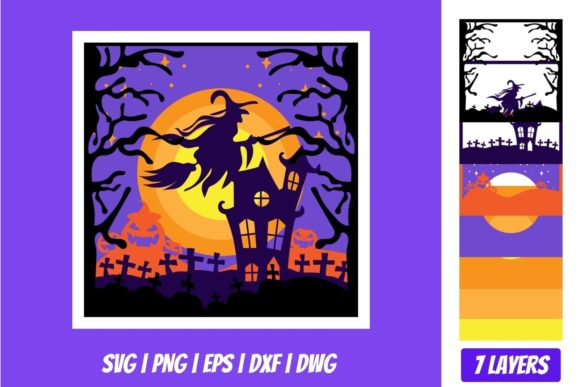
A shadowbox, in its simplest form, is an enclosed display case that holds objects in layers, creating a sense of depth and narrative. When you combine that physical concept with a digital vector format like SVG—Scalable Vector Graphics—you unlock a unique creative medium. A Halloween Shadowbox 3D Layered SVG is essentially a set of flat vector illustrations designed to be stacked, cut, and assembled into a dimensional scene. Each layer isolates specific visual elements: a full moon in the back, silhouetted trees in the middle, a wrought-iron gate in the foreground, and perhaps a fog effect that bridges them all. The result is a tactile, layered artwork that shifts with light and angle, bringing haunted imagery off the screen and into physical space.
The appeal lies in the intersection of precision and artistry. Because the files are vector-based, they scale infinitely without losing quality, meaning the same design can become a tiny desktop ornament or a wall-sized centerpiece. For creators, this offers a reliable foundation: the digital file guarantees perfect alignment of each layer, while the maker contributes material choice, lighting, and finishing touches. This marriage of digital exactness and hands-on craft is at the heart of why these SVGs have gained such traction among hobbyists, educators, and even professional set designers.
Understanding the Layered Architecture
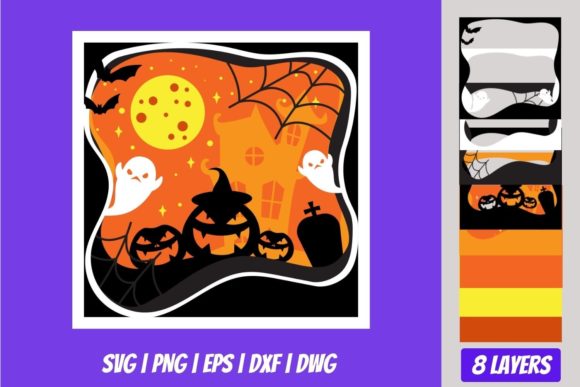
Every Halloween Shadowbox 3D Layered SVG relies on a deliberate stacking strategy. Typically, a design includes between three and seven layers, each serving a distinct visual purpose. The back layer anchors the composition—often a gradient sky, a glowing harvest moon, or a starry night. Mid-layers introduce structural elements like bare branches, graveyard fences, or crooked tombstones. The front layer usually carries the focal subject: a jack-o'-lantern, a witch on a broom, a haunted manor, or a skeletal figure.
What makes these files genuinely functional is the tab-and-slot system. Each layer has small protruding tabs that fit into corresponding slots on a base board or frame. This mechanical feature eliminates the need for glue or complex assembly, allowing the layers to stand parallel at precise intervals. Spacing is critical: too close, and the layers blend into a single flat image; too far, and the scene loses cohesion. Good SVGs include spacer pieces that maintain consistent gaps, typically between 5 and 15 millimeters, depending on the overall size of the project. This engineering thoughtfulness transforms a simple cut file into a robust, freestanding sculpture.
Material choice further influences the final appearance. Cardstock at 65 lb or 110 lb weight is standard because it holds shape without being too rigid. Some makers use translucent vellum for fog or moon layers, letting light pass through and creating a glow effect. Others laminate select layers for sturdiness, especially in larger formats. The SVG itself remains agnostic to material, but the best designs provide cut lines optimized for different media, including separate files for paper, chipboard, or acrylic.
Designing for Halloween Atmosphere
Halloween themes demand specific visual cues, and a well-crafted Halloween Shadowbox 3D Layered SVG leans heavily into contrast, silhouette, and negative space. Unlike other holidays where bright colors and cheer dominate, Halloween thrives on shadow and suggestion. The layered format is naturally suited to this because each cutout casts a real shadow onto the layer behind it, deepening the sense of gloom.
Effective designs exploit this by using high-contrast color palettes: deep purples and oranges are classic, but black, silver, and neon green also appear frequently. The frontmost layers are often solid dark tones, while back layers use lighter or brighter shades to simulate moonlight. Some SVGs incorporate perforated details—tiny holes that form stars, firefly specks, or distant lantern lights—which become visible only when backlit. This attention to microdetails elevates a simple scene into an immersive diorama.
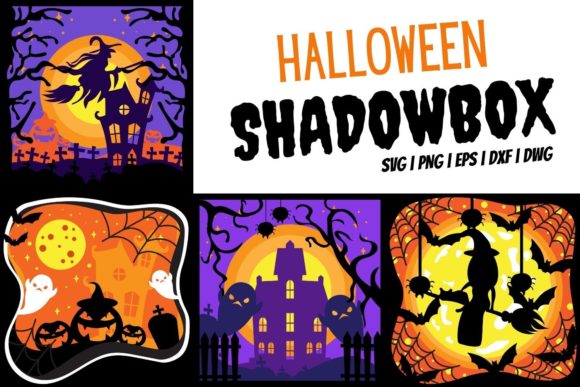
Popular compositional motifs include haunted houses with lit windows, twisted tree silhouettes framing a full moon, and graveyards with rising fog. Animal imagery like black cats, bats, ravens, and spiders appears regularly, as do classic characters such as vampires, werewolves, and scarecrows. The best designs avoid clutter, letting each layer breathe so that the viewer's eye moves naturally from front to back. Empty space is not wasted; it becomes the void that makes the haunted elements feel isolated and eerie.
Practical Use Cases Across Audiences
For home decorators, a finished shadowbox offers a seasonal accent that stands out from mass-produced plastic decorations. Because the SVG is reusable, they can cut the same design year after year, experimenting with different paper stocks, frame colors, or backlighting. Some crafters embed LED strips behind the layers, turning the shadowbox into a luminescent tableau that animates the scene.
Educators find layered SVGs valuable for teaching geometry, spatial reasoning, and design thinking. A classroom project involving a Halloween Shadowbox 3D Layered SVG can introduce students to scaling, alignment, and the physics of light and shadow. The iterative nature of cutting and assembling also reinforces patience and precision. Art teachers use these projects to discuss composition and depth in both digital and physical media, while technology educators incorporate them into lessons on vector editing and laser cutting.
Small business owners—especially those running Etsy shops, craft fairs, or print-on-demand services—use these SVGs as product templates. A single design can be sold as a digital download, a pre-cut kit with materials, or a fully assembled shadowbox. The scalability of SVG means they can offer multiple size options without redesigning the artwork. Event planners and party stylists commission custom layered SVGs for themed backdrops, table centerpieces, or photo booth props. Because the files are modular, individual elements can be swapped or recolored to match specific color schemes or branding.
For professional set designers and visual merchandisers, layered SVGs provide a lightweight, cost-effective alternative to traditional prop building. A Halloween window display can incorporate multiple shadowboxes of varying sizes, each telling a small story. The vector format integrates easily with CNC routers and large-format cutters, enabling rapid production of consistent, high-quality pieces. This professional adoption underscores the versatility of what might initially seem like a hobbyist file format.
Navigating Software and Workflow
Working with a Halloween Shadowbox 3D Layered SVG requires familiarity with vector editing software. Programs like Adobe Illustrator, Inkscape, Affinity Designer, and Silhouette Studio are common choices. Most SVGs come pre-sorted into layers, but users often need to ungroup elements, adjust colors for their specific cutter, or resize the entire project. Understanding how to manipulate the vector paths—scaling proportionally, separating tabs from artwork, and converting strokes to fills—is essential for a clean cut.
File organization matters. A professional-grade SVG set includes separate files for each layer, a combined assembly guide, and sometimes a PDF with printed instructions. Some designers color-code the layers in the SVG so that the user can visually distinguish back from front elements. Others include a nested file structure: one folder for the standard design, one for a shadowbox with added depth, and one for a mini version. Consistent naming conventions prevent confusion during assembly.
When preparing the file for cutting, users must check for overlapping paths, open contours, and duplicate lines. Vector editing software can reveal these issues, which are common in complex designs. A quick pass with the Pathfinder tool or a boolean union operation can clean up the artwork and ensure the cutting machine runs smoothly. For laser cutters, material settings must be adjusted for the specific substrate: paper requires low power and high speed, while acrylic demands the opposite. Test cuts on scrap material are always recommended before committing to the final sheet.
Customization and Artistic Direction
One of the strongest arguments for using an SVG over a static template is the ease of customization. A base Halloween Shadowbox 3D Layered SVG can be modified extensively without starting from scratch. Changing colors to match a specific palette, swapping out a witch for a scarecrow, or adding text like "Boo" or "Trick or Treat" are straightforward edits. More advanced users can merge elements from multiple SVGs, creating hybrid scenes that combine a graveyard from one file with a haunted house from another.
Lighting integration is a popular enhancement. By adding a battery-operated LED strip or a single tealight behind the back layer, the entire shadowbox becomes a lantern. The cutout areas—windows, eyes, stars—glow with intensity, while solid areas remain dark. Some designers intentionally create "light leak" paths, where tiny openings in the middle layers allow light to creep through, simulating mist or atmospheric haze. This interplay between digital design and physical illumination is where the medium truly shines.
Frame selection also affects the final aesthetic. A deep box frame (2 to 3 inches) maximizes the perceived depth, while a shadowbox with a thinner profile looks more modern and minimal. Some crafters paint the interior of the frame black to absorb stray light and enhance contrast. Others use mirrored backing to bounce light through the layers. The SVG file itself doesn't dictate the frame, but the tab lengths and spacer thicknesses must match the chosen box depth to ensure proper tension and fit.
Considerations for Durability and Display
While paper-based shadowboxes are charming, they are also delicate. Humidity, dust, and direct sunlight degrade cardstock over time. Laminating the front layers or using acid-free materials extends the lifespan, especially for pieces intended as permanent decor rather than seasonal one-offs. If the shadowbox will be handled frequently, reinforcing the tabs with a thin layer of clear-drying glue adds stability without affecting appearance.
For commercial applications, material choice becomes a business decision. Laser-cut acrylic or plywood shadowboxes cost more to produce but offer durability and a premium feel. Some designers sell both paper and acrylic versions of the same SVG, giving customers a choice between affordability and longevity. The vector file remains identical; only the production method changes. This flexibility makes the Halloween Shadowbox 3D Layered SVG a versatile asset for anyone looking to produce physical goods from digital designs.
Another consideration is scalability. A design that works beautifully at 8x10 inches may lose definition when scaled to 24x36 inches if the cut lines are too fine. Conversely, a large design scaled down may cause intricate details to become too small for a cutting machine to handle accurately. Professional SVGs often include size-specific versions, each optimized for a particular dimension. Checking the minimum detail size against the capabilities of your cutter or laser is a prudent step before production.
Community, Sharing, and Trends
The ecosystem around layered SVGs is vibrant and collaborative. Online platforms like Etsy, Creative Market, and Design Bundles host thousands of Halloween-themed sets, many with customer reviews that highlight assembly tips and material suggestions. Social media groups on Facebook and Reddit share finished projects, troubleshoot cutting issues, and swap design ideas. This community-driven feedback loop pushes designers to refine their files, add more detailed instructions, and experiment with new themes.
Current trends in Halloween Shadowbox 3D Layered SVG design include animated elements—bats on wires, swinging lanterns, or rotating moons—that add motion to the static scene. Another trend is the use of mixed media: combining paper layers with fabric, resin, or natural materials like twigs and moss. Minimalist designs with only two or three bold layers are gaining popularity among modern decor enthusiasts, while maximalist scenes with seven or more layers appeal to collectors who want intricate detail. The format is flexible enough to accommodate both extremes, which is why it continues to attract new makers every season.
As digital fabrication tools become more accessible—desktop laser cutters, affordable Cricut machines, and even 3D printers that can create shadowbox frames—the barrier to entry lowers further. What once required access to a commercial cutting plotter can now be done in a home studio. This democratization of production means that a single SVG file can reach a global audience, each maker interpreting it through their own materials, lighting, and framing choices. The result is a diverse array of physical objects, all originating from the same digital blueprint, yet each one uniquely personal.