3D Christmas Merry Bright Shadow Box: Evaluating Its Design, Use, and Practical Appeal
Seasonal décor often walks a fine line between sentimental charm and visual clutter. Many decorative pieces struggle to feel intentional beyond a single holiday, and even well-made items can lose their appeal once the tree comes down. The 3D Christmas Merry Bright Shadow Box has drawn attention for its layered construction and illuminated presentation, but does it deliver lasting value beyond the holiday season? This article offers a practical assessment of what this shadow box offers, how it performs in real-world settings, and who is most likely to benefit from adding it to their space or creative repertoire.
What Defines the 3D Christmas Merry Bright Shadow Box
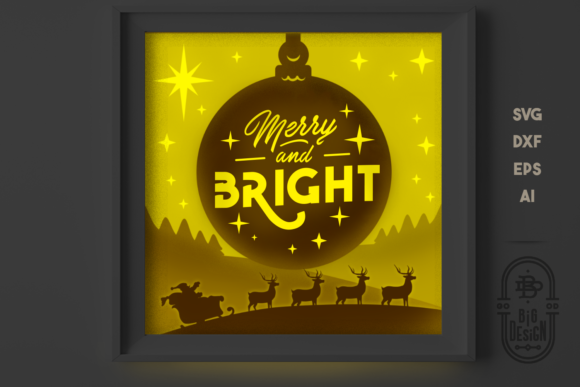
At its core, the 3D Christmas Merry Bright Shadow Box is a multi-layered decorative display piece that uses depth and lighting to create a dimensional scene. Unlike flat prints or standard framed holiday art, this shadow box relies on stacked cutouts, a backing panel, and embedded or integrated lighting to produce a sense of depth that shifts slightly depending on the viewing angle. The result is a piece that reads as both festive and sculptural, making it distinct from conventional wall hangings or tabletop ornaments.
The term “Merry Bright” is not merely ornamental. It reflects the product’s emphasis on illumination, typically achieved through small LED lights embedded within the layers or along the frame. This lighting is not just an accent—it is central to how the piece communicates its holiday theme. When lit, the layers cast subtle shadows that reinforce the three-dimensional effect, and the overall glow softens the visual contrast between the cutout elements. In unlit conditions, the shadow box functions as a layered silhouette piece, retaining much of its depth even without power.
Construction materials vary by manufacturer, but most versions use a combination of cardstock, medium-density fiberboard (MDF), acrylic sheets, or laser-cut wood. The choice of material significantly affects the product’s weight, durability, and light diffusion. Acrylic-fronted designs tend to produce a cleaner, more modern look, while wood or MDF frames lend a warmer, more traditional feel. These material decisions directly influence where and how the piece can be displayed long-term.
Key Characteristics and Strengths
Several design features distinguish the 3D Christmas Merry Bright Shadow Box from standard holiday décor. Understanding these characteristics helps clarify its practical value.
Layered Depth and Visual Complexity
The most immediately apparent strength is the layered depth. Typical shadow boxes use three to six layers, each separated by spacers or cut from progressively deeper planes. This stacking creates a diorama effect that invites closer inspection. From across a room, the piece reads as a cohesive scene, but from a few feet away, the separation between layers becomes visible, adding a tactile quality to what is otherwise a purely visual medium. This layered construction also means the piece catches ambient light differently throughout the day, giving it a dynamic quality that static prints cannot replicate.
Integrated Lighting and Atmosphere
The built-in lighting is more than an aesthetic upgrade. It serves a functional role in low-light environments, such as entryways, hallways, or living rooms used primarily in the evening. The LEDs are typically warm white or multicolored, with some versions offering adjustable brightness or timer functions. For anyone hosting holiday gatherings, the 3D Christmas Merry Bright Shadow Box can act as a subtle focal point without competing with other decorations. It provides enough illumination to be noticed but remains soft enough to avoid glare or harsh shadows.
Versatility in Placement
Because the shadow box is self-contained and does not rely on external light sources to be effective, it works well in areas where overhead lighting is limited. It sits comfortably on mantels, shelves, side tables, or wall mounts. Some versions include a stand for tabletop display and a recessed hanger for wall mounting, giving owners flexibility depending on their available space. This dual-display capability is a practical advantage for renters or anyone who prefers to rearrange their layout seasonally.
Real-World Performance and Usability
Evaluating how the 3D Christmas Merry Bright Shadow Box holds up in daily use requires attention to assembly, maintenance, and durability. Not all shadow boxes are ready to display out of the box, and the assembly process can affect initial satisfaction.
Assembly and Setup
Many shadow boxes in this category arrive flat-packed and require the user to insert the layered cutouts into the frame or attach spacers between layers. Laser-cut kits tend to fit together with tabs and slots, while cardstock versions may require adhesive or small clips. Assembly time varies from ten minutes for simpler designs to nearly an hour for more intricate, multi-layered builds. Users comfortable with detailed handwork will find the process straightforward, but those expecting a fully assembled, ready-to-hang piece may need to adjust their expectations.
The lighting component adds another variable. Some shadow boxes include a pre-wired LED strip or puck light that must be connected to a battery pack or USB cable. Battery-operated versions offer placement flexibility but require periodic battery changes. USB-powered designs are more consistent but tether the piece to a nearby outlet or power bank. Choosing between these options depends on the intended display location and how much visibility you want for cables.
Durability and Long-Term Value
Durability is largely determined by material quality. Laser-cut wood versions of the 3D Christmas Merry Bright Shadow Box generally hold up well across multiple holiday seasons, provided they are stored away from moisture and direct sunlight. Cardstock or paper-based versions, while more affordable, are more susceptible to warping, tearing, or fading over time, especially if exposed to humidity or handled frequently.
One limitation worth noting is that the layers can accumulate dust, particularly in the gaps between cutouts. Cleaning requires careful attention, as compressed air or a soft brush is safer than wiping with a cloth that might snag or bend the layers. This is a minor but real consideration for anyone who prefers low-maintenance décor.
From a long-term value perspective, the shadow box performs best as a seasonal accent rather than year-round art. The holiday-specific imagery restricts its relevance to November through January, though the craftsmanship and lighting could theoretically be repurposed if the design were more neutral. Readers looking for a flexible decorative piece that transitions across seasons may find the holiday theme limiting.
Who Benefits Most from the 3D Christmas Merry Bright Shadow Box
The practical usefulness of this shadow box varies depending on the user’s context, goals, and audience. Below are the groups most likely to find genuine value in it.
Homeowners and Hosts Seeking Seasonal Ambiance
Anyone who entertains during the holiday season will appreciate the shadow box’s ability to create a warm, visually interesting focal point without requiring extensive decoration. It works particularly well in dining rooms, entryways, or living rooms where guests naturally gather. The lighting provides enough presence to contribute to the atmosphere without dominating the space.
Content Creators and Bloggers
For lifestyle bloggers, YouTubers, and social media content creators, the 3D Christmas Merry Bright Shadow Box offers a visually appealing prop that photographs well in both natural and artificial light. The layered depth creates interesting bokeh and shadow effects that can elevate flat-lay photography, video backdrops, or holiday-themed product shots. Its relatively compact size makes it easy to incorporate into styled sets without overwhelming other elements.
Educators and Workshop Facilitators
Laser-cut or cardstock versions that require assembly can serve as hands-on projects in classroom settings, craft workshops, or maker spaces. Assembling the layers teaches basic concepts of spatial arrangement, light diffusion, and structural design. The finished product doubles as a take-home artifact that participants can display, which adds to the sense of accomplishment. However, educators should verify that the materials meet classroom safety and durability standards, especially if younger students are involved.
Small Business Owners and Retailers
Boutiques, gift shops, and holiday markets may find the shadow box a compelling product to stock, particularly if sourced from a reliable manufacturer with consistent quality. Its visual appeal and relatively high perceived value relative to its material cost make it a viable option for retail display. Business owners should evaluate the assembly requirements and decide whether to sell the product pre-assembled or as a kit, since each option appeals to a different customer segment.
Practical Recommendations and Realistic Limitations
Before committing to a purchase or integration into a project, consider the following observations.
- Check material specifications before buying. If you intend to use the shadow box for multiple seasons, prioritize laser-cut wood or acrylic-fronted designs over paper-based alternatives. The upfront cost is higher, but the longevity justifies the investment.
- Evaluate the lighting power source. Battery-operated units offer placement freedom but require ongoing cost and maintenance. USB-powered versions are more reliable for consistent daily use, especially in fixed locations like a desk or mantel.
- Understand the assembly complexity. If you are purchasing as a gift or for someone with limited patience for detailed assembly, look for models described as “pre-assembled” or “ready to display.” Kit versions are better suited for hobbyists or crafters who enjoy the building process.
- Consider the visual weight in your space. While the shadow box is not physically large, its layered lighting makes it visually prominent. Avoid placing it in already crowded areas where it competes with other decorations. A simple, uncluttered surface allows the piece to shine.
One limitation that deserves honest mention is the risk of gimmickry. Not every illuminated decorative piece maintains its appeal beyond the first few uses. Some shadow boxes rely heavily on the novelty of the lighting effect, and once that novelty fades, the underlying design may feel less compelling. The 3D Christmas Merry Bright Shadow Box avoids this pitfall when the cutout design itself is well-crafted and visually interesting even when unlit. Always assess the quality of the base design, not just the lighting gimmick.
Final Assessment of the 3D Christmas Merry Bright Shadow Box
The 3D Christmas Merry Bright Shadow Box occupies a useful middle ground between simple printed décor and elaborate holiday installations. It does not attempt to replace a full holiday display, nor does it pretend to be a year-round art piece. Instead, it offers a focused, well-executed solution for adding depth and warmth to a specific seasonal context. Its strengths lie in the layered construction, integrated lighting, and flexibility of placement. Its limitations are tied to assembly variability, material-dependent durability, and seasonal exclusivity.
For professionals, creators, and homeowners who value intentional design over generic holiday filler, this shadow box represents a reasonable investment—provided the buyer selects a version that matches their tolerance for assembly and their long-term display needs. When chosen thoughtfully, it functions as a reliable tool for seasonal ambiance, content creation, or retail offering. When chosen carelessly, it risks becoming one more item stored in a box for eleven months of the year. The difference lies entirely in how well the product aligns with the user’s specific context and expectations.