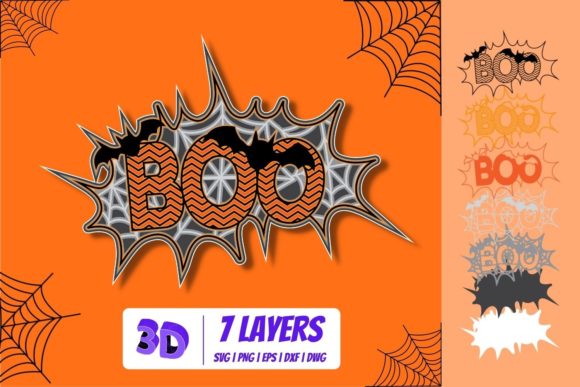
3D Boo SVG: Enhancing Digital Workflows with Interactive 3D Elements
In the evolving landscape of digital design and development, tools that offer both visual appeal and functional versatility are increasingly valuable. One such tool is 3D Boo SVG, a format that blends the simplicity of Scalable Vector Graphics (SVG) with the depth and interactivity of 3D modeling. Understanding how to integrate 3D Boo SVG into your workflow can significantly enhance your creative projects, business processes, and personal productivity.
What Is 3D Boo SVG?
3D Boo SVG is a specialized format that allows designers and developers to embed interactive 3D models within SVG files. Unlike traditional 2D SVGs, which are limited to flat graphics, 3D Boo SVG introduces a third dimension, enabling objects to be viewed from multiple angles and manipulated in real time. This makes it ideal for applications ranging from product visualization to educational content and interactive web experiences.
The format is particularly useful when working with platforms that support SVG, such as web browsers, graphic design software, and certain mobile apps. By leveraging 3D Boo SVG, users can create more engaging and dynamic content without relying on external plugins or complex coding.
Where 3D Boo SVG Fits in a Broader Process
3D Boo SVG can be integrated at various stages of a project, from initial planning to final delivery. For instance, during the concept phase, it can help visualize ideas in three dimensions, making it easier to communicate with stakeholders or team members. In the execution phase, it can serve as a component within larger digital assets, such as websites, presentations, or marketing materials.
For businesses, 3D Boo SVG can be used to improve customer engagement by offering interactive product previews. In educational settings, it can provide students with a more immersive learning experience, especially in subjects like anatomy, engineering, or architecture. For creators, it opens up new possibilities for storytelling and user interaction.
Using 3D Boo SVG Before, During, and After a Project
Before starting a project, 3D Boo SVG can be used to prototype and test ideas. Designers can quickly generate 3D models and embed them into SVG files to get a sense of how they will look and function in a real-world context. This early-stage integration helps identify potential issues and refine concepts before investing significant time and resources.
During the development process, 3D Boo SVG can be combined with other tools such as Adobe Illustrator, Blender, or Figma. These platforms allow for seamless export and import of 3D models, ensuring compatibility and consistency across different workflows. Developers can also use JavaScript libraries like Three.js to add interactivity, making the 3D elements responsive to user input.
After the project is complete, 3D Boo SVG can be used for ongoing maintenance and updates. Because SVG files are scalable and resolution-independent, changes to 3D elements can be made without affecting the overall quality of the design. This makes it an efficient choice for long-term use and frequent revisions.
How 3D Boo SVG Interacts With Other Tools and Resources
One of the strengths of 3D Boo SVG is its ability to work alongside a wide range of other tools and resources. For example, when used with content management systems (CMS), it can be embedded directly into web pages, enhancing the visual appeal of digital content. In e-commerce environments, it can be paired with product databases to display detailed 3D models of items for sale.
Collaboration is another area where 3D Boo SVG shines. Since SVG files are text-based, they can be easily shared and edited by multiple team members. This makes it ideal for cross-functional teams that need to work on different aspects of a project simultaneously. Additionally, version control systems like Git can track changes to 3D Boo SVG files, ensuring transparency and accountability throughout the development process.
Practical Implementation Tips
To effectively implement 3D Boo SVG, start by identifying the specific needs of your project. Are you looking to enhance user interaction, improve product visualization, or create more engaging educational content? Once you have a clear goal, choose the right tools and platforms that support 3D Boo SVG and align with your workflow.
When creating 3D models, focus on simplicity and clarity. Overly complex models can slow down performance and reduce usability. Use optimization techniques such as reducing polygon count and compressing file sizes to ensure smooth rendering across different devices and platforms.
Testing is also crucial. Before deploying 3D Boo SVG elements, verify their compatibility with target systems and browsers. Use tools like BrowserStack to test across different environments and ensure consistent performance. Regularly review and update your 3D assets to maintain quality and relevance over time.
Workflow Examples and Observations
Consider a scenario where a small business owner wants to showcase their products online. By using 3D Boo SVG, they can create interactive 3D models of their items and embed them directly into their website. This not only improves the shopping experience but also increases customer trust and conversion rates.
Another example involves an educator designing an interactive lesson on human anatomy. By incorporating 3D Boo SVG models of organs and body systems, the educator can provide students with a more hands-on learning experience. Students can rotate, zoom, and explore the models, leading to better comprehension and retention of the material.
For freelancers and independent creators, 3D Boo SVG offers a way to stand out in competitive markets. By adding unique 3D elements to their portfolios or client presentations, they can demonstrate their technical skills and creativity, potentially attracting more opportunities and higher-paying projects.
Factors to Consider for Long-Term Use
When integrating 3D Boo SVG into your routine, consider factors such as preparation, organization, and efficiency. Properly structuring your 3D models and SVG files can save time and reduce errors. Use consistent naming conventions and folder structures to keep your assets organized and easily accessible.
Usability is another key factor. Ensure that your 3D Boo SVG elements are intuitive and user-friendly. Avoid overwhelming users with too many interactive features, and prioritize clarity and functionality. Regularly assess the performance of your 3D elements and make adjustments as needed to maintain optimal user experience.
Finally, think about the long-term sustainability of your 3D Boo SVG assets. As technology evolves, ensure that your files remain compatible with future tools and platforms. Stay updated on industry trends and best practices to keep your workflow current and effective.